Home Know the signs
Know the signs
Domestic violence is about power and control. It is rarely one big moment, and that is exactly why it is so easy to talk yourself out of seeing it.
“A pattern of assaultive and coercive behaviours, including physical, sexual and psychological attacks, as well as economic coercion, that adults or adolescents use against their intimate partners.”
The clinical and behavioural definition of domestic violence
It is not biased by gender, race, class, income, religion or sexual orientation. Abuse is physical, mental and sexual, and most people living with it have talked themselves out of the word at least once.
Fourteen things to look for
Signs of an abusive relationship
You do not need all of these. Recognising two or three of them honestly is enough to be worth a phone call.
- Your partner stops you spending time with other people, and cuts you off from friends and family.
- Your partner has a history of drug or alcohol abuse.
- Your partner has a history of violence.
- Your partner blames you, and your “shortcomings”, for their own inability to control what they do.
- Your partner puts themselves and their feelings first, with no regard for yours.
- Your partner damages your things.
- Your friends and family have said they are worried about you and about this relationship.
- Your partner criticises you constantly, calls you names, and insults how you look, your race, your family or your faith.
- Your partner humiliates you on purpose.
- You feel like you are walking on eggshells whenever they are in the room.
- You play down what has happened to you, or how bad the injuries were.
- Your partner is your only real source of comfort and support.
- You put their needs ahead of your own, every time.
- You find yourself explaining or justifying what they did, to other people and to yourself.
From the Women’s Resource Center, Oceanside
Signs your abuser is not changing
Almost everybody gets a version of the apology. These are the ways you can tell it is the same thing in a different voice.
- They play down the abuse, or deny how serious it really was.
- They still blame other people for their own behaviour.
- They tell you that you are the one who is abusive.
- They push you into couples counselling.
- They tell you that you owe them another chance.
- You have to keep pushing them to stay in treatment.
- They say they cannot change unless you stay and support them.
- They work on your sympathy, and on your children, your family and your friends.
- They want something from you in return for getting help.
- They pressure you into decisions about the relationship.
What happened to Nicole
The warnings were all there, on paper
Nicole’s boyfriend was arrested twice on domestic violence charges. A judge ordered him to stay away from her. He vandalised her apartment twice and tried to pull her out of the restaurant where she worked.
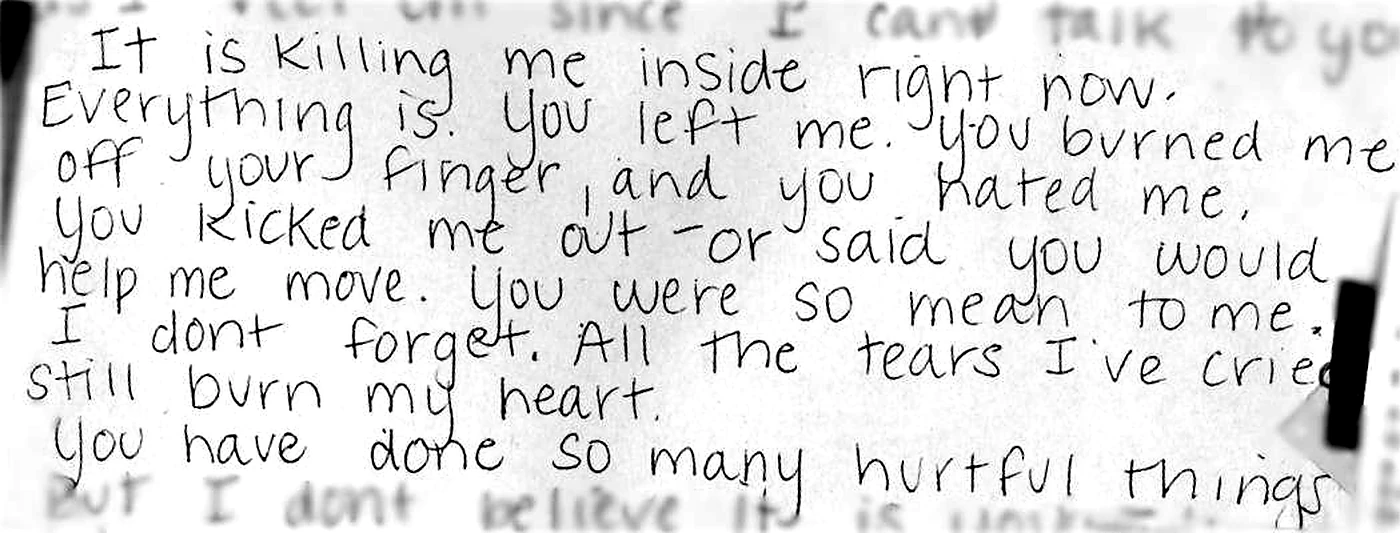
Four months before he killed her, she persuaded a judge to lift the order. She had told several people she wanted to leave and could not find the strength, because she loved him.
None of that makes it her fault. It is what abuse does, and it is why the list above is worth reading twice.
Listen, learn, speak out
If any of this sounded familiar
You do not have to be sure, and you do not have to have decided anything. The people on the other end of these lines talk to people who are still working it out all day long.